
London is full of a vibrant and rich history. Wherever we go we can’t help but notice the blue plaques scattered across the city. But how often do you stop and read them? Do you ever dive deeper into their stories? Well, we did.
In Soho there are so many extraordinary characters past and present. In this series we will take a journey back in time and learn more about what stories our beloved Soho streets hold.
HIs Stories later helped inspire dickens’ own festive scenes
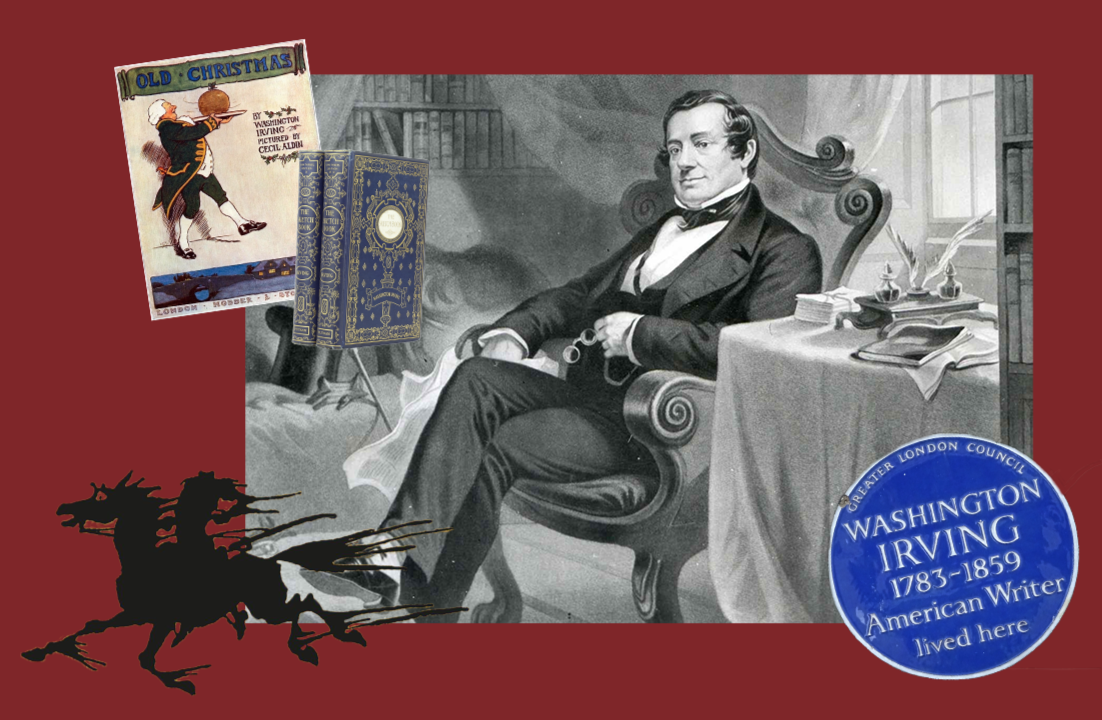
WASHINGTON IRVINE | 8 ARGYLL STREET | 7 MINUTE WALK FROM BROADWICK SOHO
From New York, Irving was already a published and successful author. His first triumph was The Sketch Book of Geoffrey Crayon (1819). This collection included the stories ‘Rip Van Winkle’ and ‘The Legend of Sleepy Hollow’. He came over to London in 1829 to serve as Secretary to the American Legation. Irving found home on Argyll street and stayed until his return to America in 1832. While there he finished up The Alhambra (1832). During Irving’s time in London, he published under the pseudonym Geoffrey Crayon. One fan of Geoffrey Crayon was Charles Dickens himself. Having read the stories as a child, they became like second-nature to him. It is thought that Dickens’ Christmas scenes in The Pickwick Papers were inspired by those from Irving’s collection. Irving went on to be one of America’s major literary figures and one of the first American writers to achieve fame both west and east of the Atlantic.
Argyll Street is now a bustling and busy street forking off from Oxford Street. While the plaque presides just to the left of the London Palladium, 8 Argyll Street is actually tucked behind the famous West End theatre.
10,000 wigs. every christmas.
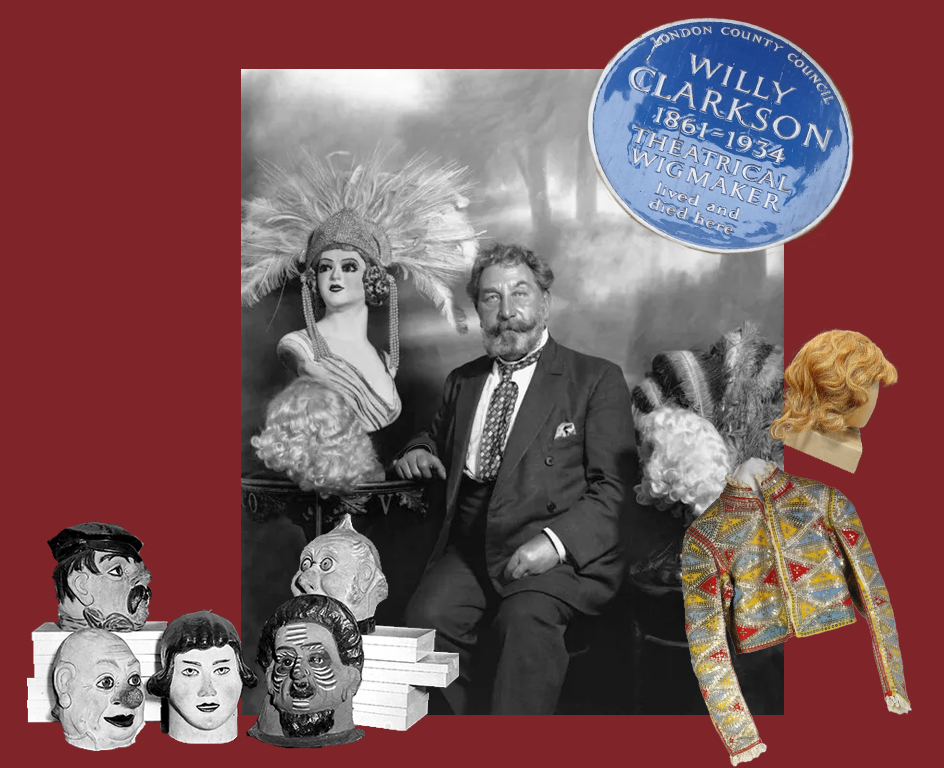
WILLY CLARKSON | 41-43 WARDOUR STREET | 5 MINUTE WALK FROM BROADWICK SOHO
William Berry ‘Willy’ Clarkson was born into the wig making business. Born in London to a wigmaker, he inherited his father’s business at just 12 years old. The business was originally based over on Wellington Street. For over 50 years the business flourished. On theater programs everywhere, the announcement ‘Wigs by Clarkson’ could be seen. He was hiring out 10,000 wigs each Christmas. Famed actors came to Willy for costumes, while others hired clothes for military tournaments and fancy-dress balls. In 1888 the business was granted a royal warrant by Queen Victoria as he then began to supply wigs and costumes for the Osborne and Balmoral. Willy did, however, get into quite a bit of trouble in his time. Just a year after his royal warrant he was taken to court for illegally employing women to work on Sundays. He was also accused of fire insurance fraud. Willy was a master of disguises. He was the one who created the costumes for the infamous ‘Dreadnought Hoax’. It is also alleged that, inadvertently, Willy disguised the murderers Jack the Ripper and Dr. Crippen.
41-43 Wardour Street became the home of Willy’s business and himself from 1905 until his death in 1934. Designed by HM Wakley, the exterior is built with red brick and green stone. It boasts three levels of wide windows, a clock which advertises the premise of a ‘Costumier and Perruquier’, and bronze plaques that flank either side of the entrance. The plaques record the laying of the foundation stone and the coping stone by famous actors of the time Sarah Bernhardt and Sir Henry Irving. Now 41-43 Wardour is within Chinatown and houses Wong Kei, a Chinese restaurant.
A NAME THAT BECAME A STYLE
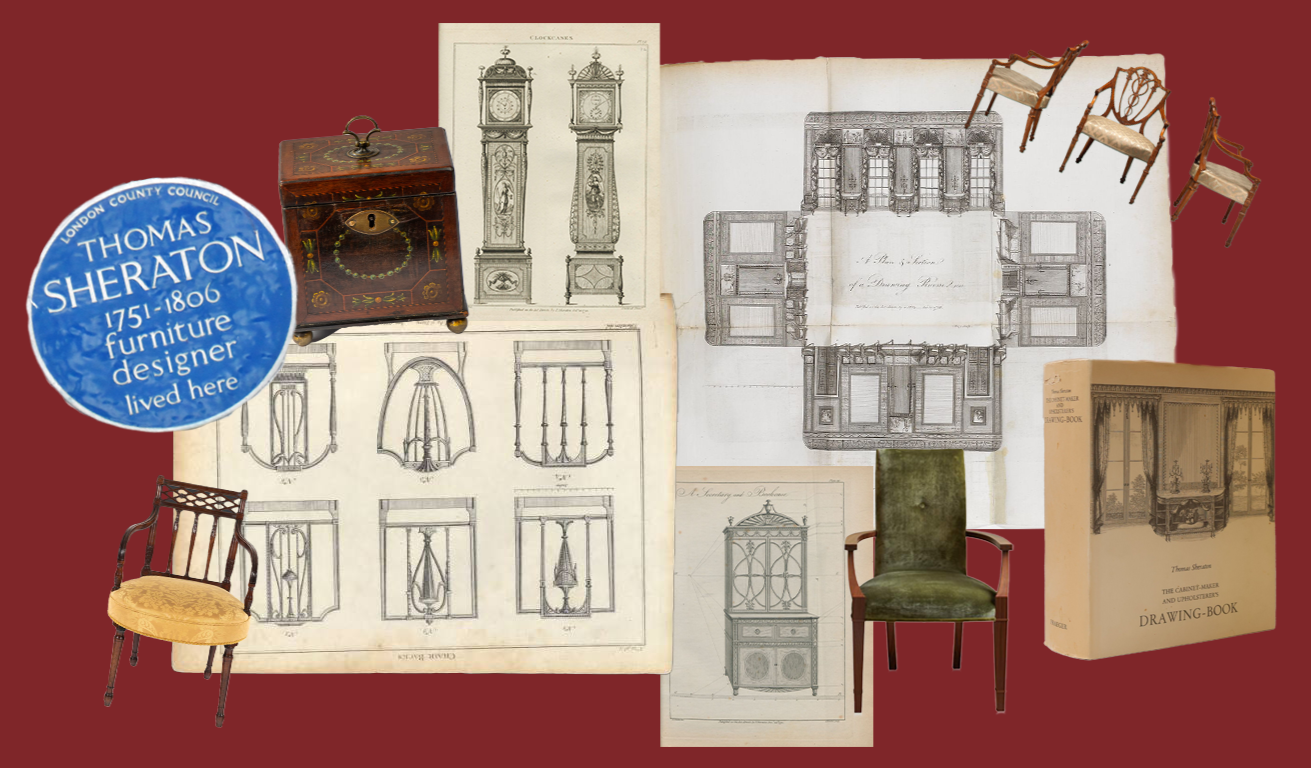
THOMAS SHERATON | 163 WARDOUR STREET | 2 MINUTE WALK FROM BROADWICK SOHO
Sheraton moved to London in 1790 from County Durham. The following year he published his first major work, The Cabinet Maker and Upholsterer’s Drawing-Book. This book was split into weekly parts and made to help craftsmen learn proportion, perspective, and geometry. He also included a number of his own designs within the book. While living at 163 (formerly 106) Wardour, he published the second edition of his Drawing Book (1794) and Scriptural Subjection to Civil Government in an Exhortation to Real Christmas (1794). From 1798 to 1800 Sheraton and his wife moved just down the street to 147 (formerly 98) Wardour. They spent a bit of time back in County Durham and then back to Soho again, settling at 32 Broadwick (formerly 8 Broad) Street. There he published The Cabinet Directory and was in the process of another when he died in 1806. Sheraton died in poverty despite working as a draughtsman, author, publisher, teacher of drawing, and a Baptist minister. His designs later became widely influential in both Europe and America.
163 Wardour Street now homes Pho Soho, a Vietnamese restaurant. 147 Wardour Street is the site of Arlette House which is where, in 1974, a classic photo of Queen was taken. 32 Broadwick Street is now an Aimé Leon Dore store with an adjoining cafe.